How a Commercial Electrician Supports Industrial Facilities


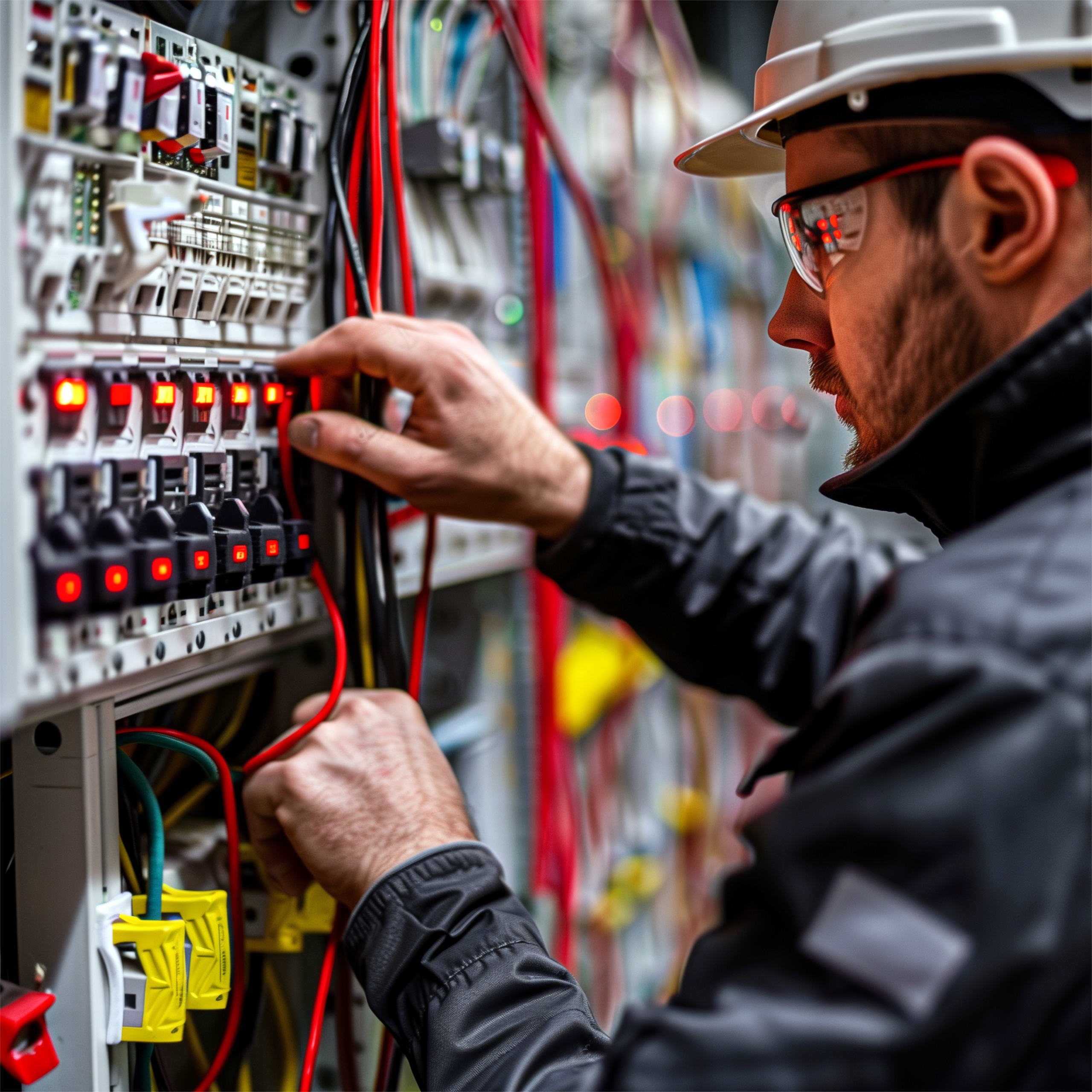
Industrial facilities ask more from their electrical systems than almost any other type of building. A retail store can tolerate a short lighting issue. An office can often work around a tripped circuit for an hour. A manufacturing plant, food processing line, cold storage warehouse, or distribution hub does not have that luxury. In those settings, power quality, system reliability, and safe equipment operation affect production, labor efficiency, product quality, and worker safety all at once.
That is where a Commercial Electrician becomes indispensable. In industrial environments, the work goes far beyond pulling wire and replacing breakers. The job involves understanding how power moves through a facility, how machinery behaves under load, how control systems interact with motors, and how a small electrical weakness can ripple into major downtime. Good electrical work in a plant is rarely flashy. More often, it shows up as a line that starts on time, a panel that runs cooler, a motor that stops nuisance tripping, or a shutdown that lasts six hours instead of two days.
The best support a Commercial Electrician gives an industrial facility is not just technical. It is operational. The electrician helps the site stay productive, compliant, and safe under real working conditions, not ideal ones.
Industrial electrical work is a different animal
People sometimes use commercial and industrial electrical work as if they are interchangeable. They overlap, but the demands inside an industrial facility are usually more severe. The voltages may be higher. The equipment loads are heavier. The environment may include moisture, dust, vibration, washdown chemicals, extreme temperatures, or corrosive air. Maintenance windows are often narrow, and every hour of downtime has a visible price tag.
A Commercial Electrician working in this setting needs to understand more than basic branch circuits and lighting layouts. They may be dealing with motor control centers, variable frequency drives, process equipment, transformers, backup power systems, conveyors, pumps, compressors, and automated machinery. They must think about selective coordination, arc flash exposure, available fault current, voltage drop, harmonics, and lockout procedures. If a facility runs around the clock, the electrician also has to plan work that can be done safely while large parts of the operation stay live.
That mix of technical depth and practical judgment is what makes experienced industrial electrical support so valuable.
Keeping production running, even when the plant never really stops
The most obvious way a Commercial Electrician supports an industrial facility is by reducing downtime. That sounds simple, but downtime comes in different forms.
There is catastrophic downtime, where a major feeder fails, a switchgear section faults, or a production line goes dark. Then there is chronic downtime, which often costs more over time. A conveyor motor that trips twice a week. A drive that overheats every summer. A packaging line with intermittent control voltage issues that operators reset so often they stop reporting them. Those smaller failures eat away at output, maintenance budgets, and morale.
A seasoned electrician learns to look past the immediate symptom. If a breaker trips, the real question is why. Was the circuit overloaded? Is a motor drawing excessive current because bearings are failing? Is a VFD introducing harmonics that are heating conductors? Is a poorly terminated lug creating resistance and heat? Has a recent equipment addition pushed the panel beyond what it was originally designed to carry?
One plant manager I worked with described it perfectly: “We do not lose money when something breaks. We lose money when it breaks the same way three times.” That is the difference between repair work and support. A Commercial Electrician who https://miloneaa730.brightpathdigest.com/posts/commercial-electrician-solutions-for-warehouse-facilities supports industrial facilities does both, but the real value is in finding and correcting the root cause.
Building and upgrading power distribution with room to grow
Industrial facilities rarely stay static. A line gets faster. A new machine arrives. Refrigeration capacity expands. More robotics are added. A mezzanine receives new packaging equipment. These changes often happen faster than the original infrastructure can comfortably support.
A Commercial Electrician helps facilities evaluate whether their existing electrical distribution still matches actual demand. That may involve load calculations, panel schedule reviews, feeder sizing checks, transformer capacity assessments, and field verification of how the building is really being used. On paper, a plant may look balanced. In practice, one section may be heavily loaded while another has spare capacity.
This is especially important in older facilities. It is common to find layers of additions made over fifteen or twenty years. A panel labeled correctly in 2012 may now feed equipment no one expected. Spare breakers may not be truly spare. Disconnects may have been repurposed. Conduit routes may be crowded well beyond what the original installer envisioned.
When a Commercial Electrician plans upgrades, the best work anticipates future operational changes. It is often cheaper to upsize a feeder, add spare conduit, or install a larger panel section during a scheduled project than to revisit the area a year later after production grows. That kind of foresight matters in industrial settings, where access is difficult and shutdowns are expensive.
Preventive maintenance is not glamorous, but it pays for itself
Many of the worst failures in industrial facilities come from components that gave warning signs long before they quit. Loose terminations, dust buildup, thermal cycling, moisture intrusion, aging insulation, and overloaded circuits rarely appear overnight. The problem is that busy plants can normalize small irregularities until they become serious.
A Commercial Electrician supports industrial operations by creating and carrying out preventive maintenance routines that match the facility’s risk profile. In a clean warehouse, that may be relatively straightforward. In a sawmill, foundry, food plant, or chemical environment, it needs to be far more rigorous.
Preventive electrical maintenance often includes the following:
- Inspecting switchgear, panels, disconnects, and motor controls for heat, corrosion, contamination, and loose connections
- Testing breakers, overloads, and protective devices to verify proper operation
- Using infrared scans to spot hot spots before they become failures
- Checking motor circuits, control wiring, and grounding paths for deterioration
- Cleaning and tightening equipment during planned shutdowns
Those tasks sound routine, but they often prevent the failures that cause the biggest disruptions. An infrared scan, for example, can reveal a lug heating 30 or 40 degrees above similar connections under the same load. That single finding might prevent a burnt bus connection, an emergency shutdown, and a costly cleanup.
Good preventive work also creates a history. Patterns begin to emerge. The same disconnect may loosen every season because of vibration. A line section may run hotter in August because nearby refrigeration equipment increases ambient temperature. A panel may show recurring imbalance that points to a process issue, not just an electrical one. Over time, the electrician becomes one of the clearest eyes on how the facility is aging.
Supporting motors, drives, and the equipment that does the real work
Most industrial processes depend on motors. Pumps move liquids, fans move air, conveyors move product, mixers blend materials, compressors keep systems running, and machine tools shape parts. When one motor stops unexpectedly, it can take an entire process down with it.
That is why motor and drive support is a major part of what a Commercial Electrician contributes. The role includes installation, troubleshooting, replacement, and coordination with mechanics and controls technicians. It also requires understanding the difference between an electrical fault and a mechanical problem presenting as an electrical symptom.
A motor pulling high amperage may have a winding issue, but it may also be fighting a seized bearing, a jammed conveyor, poor alignment, or a process condition the operators do not see. A drive fault might point to a bad drive, but it could just as easily stem from voltage imbalance, inadequate cooling, grounding issues, or line side disturbances.
In one packaging facility, a recurring conveyor shutdown was blamed on a drive that had already been replaced twice. The actual issue turned out to be fine dust clogging the drive enclosure filters, which raised internal temperature enough to trigger faults during the hottest part of the shift. The electrical fix was not another drive. It was cleaning up the enclosure arrangement, improving airflow, and adjusting the maintenance interval. That kind of outcome is common in industrial work. The best answer is not always the most obvious component swap.
Managing control systems and the gray area between power and automation
Industrial facilities increasingly depend on controls, sensors, and communication between equipment. Even where a dedicated controls contractor or in-house automation team handles programming, the Commercial Electrician often lives in the middle ground between power distribution and machine operation.
That can mean wiring and terminating control panels, landing I/O, tracing interlocks, replacing failed sensors, verifying power supplies, and helping isolate whether a fault is electrical, mechanical, or logic-based. The work demands patience. Control issues can hide in small details, such as a loose neutral, a failed relay, a damaged cable in a tray, or a control transformer that has been overloaded by years of incremental additions.
An industrial facility benefits enormously when its electrician can communicate clearly with operations and automation staff. Not every shutdown is a “machine issue,” and not every electrical complaint originates in the power side. When those teams collaborate well, troubleshooting gets faster and less adversarial. That matters in real plants, where pressure rises quickly when a line is down and several departments are standing around waiting for answers.
Safety is a production issue, not a paperwork issue
Electrical safety in an industrial facility cannot be treated as a binder on a shelf. The hazards are too serious. Arc flash risk, exposed energized parts, damaged flexible cords, missing panel blanks, failed disconnects, poor grounding, and improvised field modifications can all create conditions that hurt people fast.
A Commercial Electrician supports safety by correcting physical hazards, but also by shaping work practices. Lockout and verification procedures, proper labeling, equipment-specific disconnecting means, and clear isolation points are all part of operational safety. So is making sure repairs are actually repairs, not temporary patches that stay in place for years.
The facilities that manage electrical risk well usually have a few habits in common:
- They fix small deficiencies before they become normalized
- They document changes so future work is based on reality, not guesswork
- They schedule shutdown work with enough time to do it safely
- They treat energized troubleshooting as a last resort, not a convenience
- They involve qualified electrical personnel early when adding or moving equipment
Those habits reduce injuries, but they also reduce surprises. A facility with accurate labeling, clean gear, known isolation points, and current drawings gets back online much faster when something does go wrong.
Working around shutdowns, sanitation windows, and production pressure
The technical side of industrial electrical work is only half the story. The other half is timing. A Commercial Electrician often has to support a facility under constraints that outsiders underestimate.
A food plant may allow only a short overnight sanitation window. A warehouse may need electrical work completed before morning shipping begins. A manufacturer may grant a single weekend outage each quarter for major maintenance. In some operations, electricians work in stages, isolating one section while keeping upstream and downstream systems alive. That requires careful sequencing, temporary power planning, and clear communication with operations.
There is also the challenge of cleanliness and environment. In washdown facilities, equipment selection matters. So do enclosure ratings, sealing methods, corrosion resistance, and cable support systems. In dusty environments, contamination control is a constant concern. In high heat areas, conductor ampacity and equipment ventilation deserve close attention. A Commercial Electrician who understands the environment can prevent a lot of premature failure simply by choosing suitable materials and installation methods.
That is one reason industrial clients value electricians with field judgment, not just code familiarity. Code compliance is the floor. A facility needs installations that survive real production conditions.
Troubleshooting under pressure requires method, not heroics
When a line goes down, everyone wants speed. The temptation is to chase the loudest symptom, replace the most visible part, and hope. That approach works just often enough to become a bad habit.
The strongest electricians in industrial settings are usually methodical, even under pressure. They verify what failed, what changed recently, what still works, and where the fault boundary likely sits. They ask operators what happened just before the problem, because those details often matter. They look for heat, smell, vibration, contamination, and signs of previous repair. They isolate variables where possible.
This discipline saves time. It also prevents secondary damage. Resetting and re-energizing a faulted system repeatedly can make the original failure worse. So can bypassing controls or overfusing a circuit to “get through the shift.” Short-term thinking is expensive in industrial facilities. A Commercial Electrician often has to be the person in the room willing to say, “We can restart safely after we know this part of the system is sound.”
That kind of restraint is not always popular in the moment. It is almost always the right call.
Energy use, power quality, and costs that hide in the background
Not every electrical problem in an industrial facility causes a shutdown. Some quietly drain money every month. Motors that run inefficiently, poor power factor, unbalanced loads, aging lighting systems, and excessive voltage drop can all raise utility costs or shorten equipment life without creating a dramatic event.
A Commercial Electrician can help identify these less visible issues. Sometimes the answer is straightforward, such as replacing outdated lighting in non-process areas or correcting a heavily loaded panel arrangement. Other times it involves measuring load behavior over time, looking at startup current, reviewing demand spikes, or checking whether harmonic-producing equipment is affecting sensitive systems.
Power quality issues deserve special attention in facilities with automation, precision controls, or electronic drives. Nuisance faults, unexplained reboots, and intermittent sensor trouble may trace back to electrical noise, grounding problems, or unstable supply conditions. Those cases can be frustrating because nothing appears completely broken. But when resolved, the improvement is immediate and noticeable to operators.
Facilities do not always need a major capital project to benefit. Sometimes the biggest gains come from targeted changes made by an electrician who knows where to look.
Documentation is part of the trade
One of the least celebrated services a Commercial Electrician provides is accurate documentation. In industrial facilities, this matters more than many managers realize. Updated panel schedules, feeder identifications, one-line revisions, equipment labels, and maintenance records reduce future downtime because they make troubleshooting faster and safer.
Poor documentation creates hidden costs. If every shutdown starts with “let’s figure out what this actually feeds,” the facility is wasting skilled labor before the real work even begins. If no one knows which disconnect isolates a section of line, lockout takes longer and risk increases. If additions are never marked up on drawings, each future project starts from a flawed assumption.
Experienced electricians tend to be practical about this. Documentation does not need to be perfect to be valuable. It does need to be current enough that the next qualified person can work with confidence.
What industrial managers should look for in electrical support
Not every electrician is the right fit for an industrial facility. The environment demands more than code knowledge and installation skill. It calls for reliability, clear communication, and the ability to think beyond the immediate task.
Managers usually get the best results from electrical support that shows a few traits. First, the electrician respects production realities but does not let schedule pressure override safety. Second, they explain findings in plain language, not vague jargon. Third, they distinguish between temporary restoration and permanent correction. Fourth, they document what changed. Fifth, they understand that a plant is a system, not a set of unrelated pieces.
That last point is worth stressing. In industrial settings, electrical work touches operations, maintenance, quality, sanitation, and safety. A Commercial Electrician who sees the whole facility can make better decisions about routing, equipment location, shutdown planning, and future capacity. That broad perspective often matters as much as technical speed.
The quiet value of a good electrical partner
The strongest industrial facilities are not the ones that never have electrical problems. They are the ones that detect weaknesses early, respond well under pressure, and invest in systems that fit how the plant actually runs. A capable Commercial Electrician plays a central role in all three.
Sometimes that role is obvious, such as restoring power after a fault or bringing a new production line online. More often, it is quieter. It is a properly torqued connection. A cleaner control cabinet. A better conduit route in a washdown area. A panel that gets relabeled before the next outage. A shutdown plan that accounts for every crew on site. A recommendation to replace a tired disconnect before it fails in the middle of peak season.
Industrial facilities depend on electrical systems that can handle hard use, changing demands, and very little margin for error. Supporting those facilities means combining technical skill with practical judgment, patience, and respect for the operation as a whole. That is the real work of a Commercial Electrician, and when it is done well, the plant runs better in ways everyone notices, even if they never see the wiring behind it.
Paxos Electric Company, LLC
255 NJ-15
Wharton, NJ 07885
(973) 598-8543
FAQ About Commercial Electrician
How much should a commercial electrician charge per hour in Wharton NJ?
Hourly rates vary by contractor, job complexity, and timing. Ask whether the quote includes a service minimum, travel, materials, and any after-hours charges. A written estimate makes it easier to compare the total cost.
How to estimate commercial electrical jobs?
Start with a defined scope and a site walkthrough. Share the plans, equipment specifications, site access details, and any limits on shutdowns. Ask the contractor to itemize labor, materials, and testing, and to identify permit responsibilities and exclusions.
Do any electricians give free estimates?
Some contractors offer free estimates for planned projects. Paxos Electric Company offers free estimates for commercial electrical work. Ask when scheduling whether troubleshooting or diagnostic visits carry a separate fee.